Showing posts with label exhibition. Show all posts

Wednesday, 1 September 2010

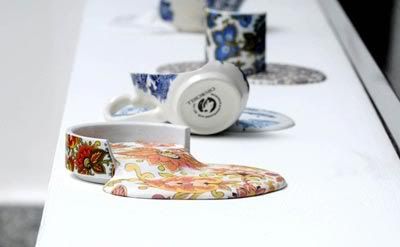
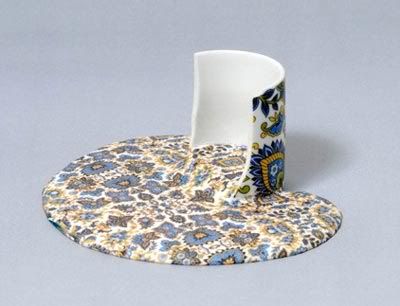
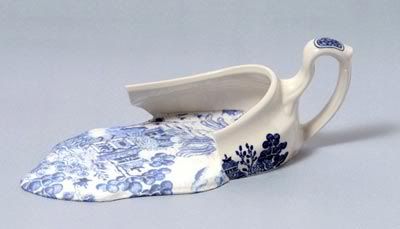
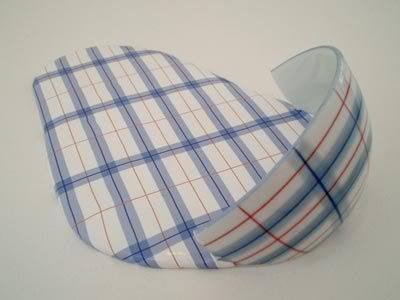
Broken Things by Livia Marin

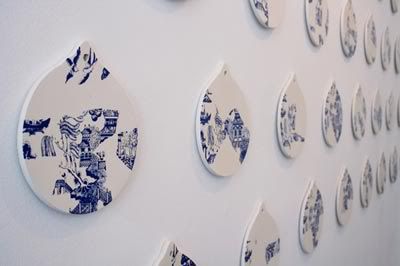
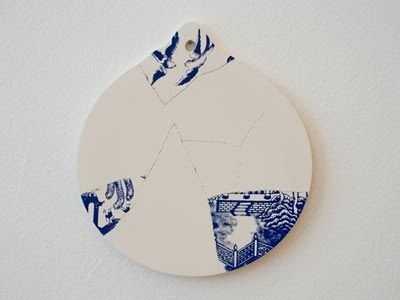
'Broken Things' by Livia Marin, an exhibition at House of Propellers, London is a group of 25 Porcelain and ceramic objects with resin plaster, lacquer, transfer-print, varnish.

'Beginning with forms such as a humble porcelain cup, bowl or jug, Marin turns familiar pieces into precious handcrafted art objects through distortion; essentially emphasising through imperfection their uniqueness and beauty.

Smooth melted rounds meet awkward corners, and pattern meets sheen and gloss in a collection unified by material and a swerve from the expected.'
- ME Design Magazine.

a+.  livia marin   via Read more...

Sunday, 1 August 2010

Timelessline Art by Michal Kubacki

Timeless drawing from Timelessline on Vimeo.

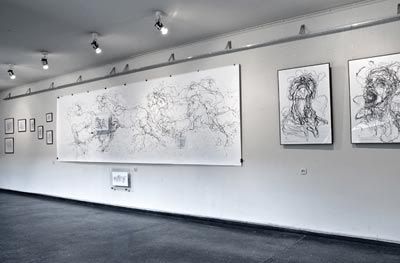
I am not a fan of horse/ horses drawing etc. but these...the lines that creates these horses is something different here...
Michal Kubacki is the creator of TIMELESSLINE based in Poznan, Poland.

'It all began one day when I was drawing.

I began to realize that my subconscious, not my conscious self, was guiding my hand and I was merely holding the pen for my subconscious to draw through me. Upon this momentous realization, I began to notice life in different dimensions of time. This influenced me so much, that I could not deny absolute of being.

I draw "Alla prima" with ink, sometimes I use marker pen on paper. I invented a special technique which expresses my philosophy- TIMELESSLINE.'
- Michal Kubacki.


See Michal Kubacki statements on 'Perception of Being In Time'...

a+.  statements
a+.  timelessline   via
Read more...

Sunday, 1 November 2009

Nissan Land Glider

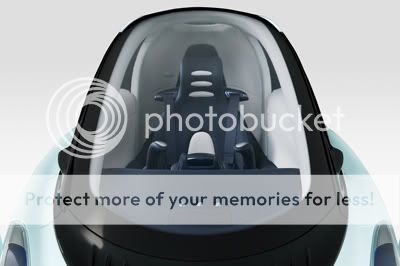
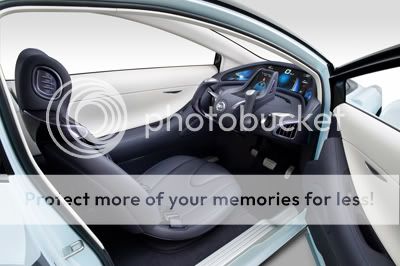
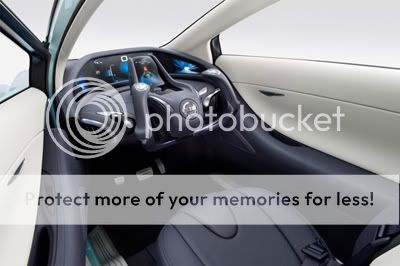
Nissan Land Glider at The 41st Tokyo Motor Show 1Nissan Land Glider at The 41st Tokyo Motor Show 2
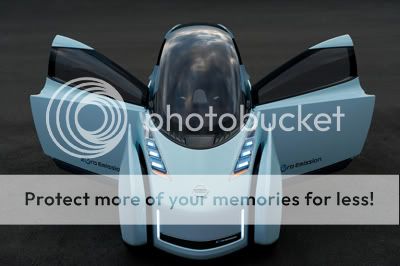
The 41st Tokyo Motor Show 2oo9 is going on now, starting on 23 Oct (Fri) until 4 Nov (Wed) 2oo9 at Makuhari Messe, Chiba City. There's this car that interest me, the Nissan Land Glider. The 2-seated fully electric car meant to be an urban runabout, thus it is extremely narrow in size to ease congestion and makes it easier for parking.

'Inside the cockpit, the Land Glider's pilot sits front and center behind a suitably futuristic instrument cluster and a steering wheel that looks like twin joysticks. According to Nissan, the steering operations are computer controlled through a drive-by-wire arrangement, so there doesn't seem to be a direct connection between the steering wheel and the car's four contact patches.

Perhaps the most interesting bit Nissan pioneered with the Land Glider is the ability to lean into turns like a motorcycle. While this isn't an entirely new concept, it's a first for Nissan and the technology seems to be very well implemented in the Land Glider.'
- Autoblog.

Below photos for the Nissan Land Glider Concept Car.Nissan Land Glider concept 1Nissan Land Glider concept 2Nissan Land Glider concept 3Nissan Land Glider concept 4Nissan Land Glider concept 5
Watch the Nissan Land Glider Concept here.

Nissan Land Glider concept 6Nissan Land Glider concept 7Nissan Land Glider concept 8Nissan Land Glider concept 9Nissan Land Glider's futuristic cockpit.

a+. autoblog
a+. design bloom via tokyo motor blog
Read more...

Monday, 21 September 2009

Glass Microbiology by Luke Jerram

Artificially coloured image by David Sayer, Wellcome Trust (8cm diameter)Artificially coloured image detail
Artificially coloured image of a Glass Microbiology

These amazing viral glass sculptures are works from artist Luke Jerram, who had reproduced bacteria and viruses like Swine Flu, HIV and E-coli in glass. Luke Jerram's multidisciplinary practice involves the creation of sculptures, installations, live arts projects and gifts. Since his professional career as an artist began in 1997 Luke has created a number of extraordinary art projects which excite and inspire people around him.

An exhibition with all Luke Jerram's glass sculptures will be presented along with his photographic works and video at Smithfield Gallery, London from 21st September -3rd October 2oo9 where all works are for sale. The official launch will be on 22nd September from 6-8pm. The gallery opens from Monday -Friday, 10-6pm.

'These transparent glass sculptures were created to contemplate the global impact of each disease and to consider how the artificial colouring of scientific imagery affects our understanding of phenomena. Jerram is exploring the tension between the artworks' beauty and what they represent, their impact on humanity.


The question of pseudo-colouring in biomedicine and its use for science communicative purposes, is a vast and complex subject. If some images are coloured for scientific purposes, and others altered simply for aesthetic reasons, how can a viewer tell the difference? How many people believe viruses are brightly coloured? Are there any colour conventions and what kind of ‘presence’ do pseudocoloured images have that ‘naturally’ coloured specimens don’t? How does the choice of different colours affect their reception?

In response to these questions, Jerram has created a series of transparent, three dimensional sculptures. Photographs of these artworks will be distributed to act as alternative representations of each virus. Sayer won an award from the Institute of Medical Imaging 2007.

The sculptures were designed in consultation with virologists from the University of Bristol using a combination of different scientific photographs and models. They were made in collaboration with glassblowers Kim George, Brian Jones and Norman Veitch.'
-Luke Jerram.

Commissioned proposal for Wellcome Trust
A commissioned proposal for Wellcome Trust


Smallpox, HIV and an 'Unknown Future Mutation'


HIV, 22cm diameter
HIV, 22cm diameter


SARS Corona Virus. (22cm diameter)


E. coli (105cm long)E. coli detail
E. coli


Swine Flu (25cm high)Swine Flu detail
Swine Flu


Smallpox, 25cm highSmallpox, 20cm wideSmallpox detail
Smallpox


Check out how Luke work on this HIV sculpture from this video here.

Jerram said,
"Its great to be exploring the edges of scientific understanding and visualisation of a virus. Scientists aren't able to answer many of the questions I ask them, such as how the RNA is exactly fitted within the Capsid? At the moment, camera technology can't answer these questions either. I'm also pushing the boundaries of glassblowing. Some of my designs simply can't be created in glass. Some are simply too fragile and gravity would cause them to collapse under their own weight. So there's a very careful balancing act that needs to take place, between exploring current scientific knowledge and the limitations of glassblowing techniques."

a+. luke jerram
a+. the smithfield gallery via
Read more...

Friday, 11 September 2009

Antony Gormley’s “Field for the British Isles”

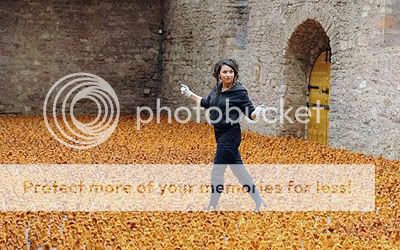
Field for the British Isles 1
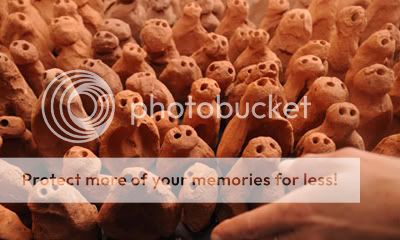
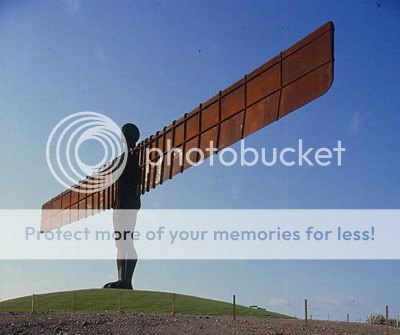
Antony Gormley’s Field for the British Isles (the artist behind the Angel of The North), comprises 40,000 small terracotta figures ranging from 3-10 inches high.

"Wearing socks to avoid damaging the delicate figures Natalie Elder, 26, was given the precarious task of trying to fill in some of the gaps.

The artwork, dubbed the 'terracotta army' has now been moved to a new home at the Spanish Barn in Torquay, Devon.

The work of art is being put together using laser markers by a dedicated team of volunteers under the watchful eye of a team from the Arts Council.

Miss Elder said: "I'm really glad I volunteer. I have been a bit nervous but you just have to be careful. I don't know how many people applied but I'm really pleased I was accepted. It is great to be able to help put it together. "I thought it was going to be quite stressful but actually it's been quite therapeutic." The 40,000 pieces were all made in St Helens, Merseyside, as a community project and there are strict guidelines as to how the pieces should be laid out and what angle they should be viewed from. Twenty-five crates of dark and lighter characters are being installed with a 'hospital' for those which refuse to stand up."
- Telegraph.co.uk
Field for the British Isles 2Field for the British Isles Detail 1Field for the British Isles Detail 2
Field for the British Isles.
2009.
Terracotta, 3-10 inches high.


Angel of The North 1Angel of The North 2
Angel of the North Permanent installation at Gateshead, England.
1998.
Steel 22 x 54 x 2.20 m.

a+. antony gormley via telegraph via mrod
Read more...

Monday, 7 September 2009

Lathe by Sebastian Brajkovic

Lathe is a series of furniture that appear to have been stretched or extruded by designer Sebastian Brajkovic.

'They are called ‘Lathe’ because of the apparent rotating effect of the design. In fact the word Lathe comes from the Latin word used to convey the idea of milk being stirred.
My very first thought with making this design was actually a practical one. I wanted to create more space on a singular chair by “extruding” the seat’s surface area. This extruding idea came from a Photoshop function where you can pick a row of pixels and extend them as long as you want. This modern computer method aided me to devise new ways of sketching as a contradictory partner in my design process. In this paradoxical sense, using antique forms was the next logical step.’
-Sebastian Brajkovic.


Lathe I View 1Lathe I View 2Lathe I View 3Lathe I Detail 1Lathe I Detail 2
Lathe I, 2008. (Edition of 8)
H 85 L 114 W 114 cm.
Bronze, embroidered upholstery.
In Lathe I, Brajkovic twists the familiar seventeenth-century dining chair and conjures up a playful alter reality, where objects themselves can be physically stretched and pulled as if in digital programme. The Lathe I has been pierced by a central axis running through the profile of the chair back, and as though being turned on a giant lathe, the seat and back extend around offering up a new, more spacious seating arrangement. With the seat extruded, the arms of the chair look like they might meet in reverse, the whole piece existing in the negative space of a traditional chair.
Check out the rest of the designer fabulous works that were exhibit at the Carpenters Workshop Gallery during February this year.


Lathe V View 1Lathe V View 2Lathe V View Detail
Lathe V, 2007. (Edition 8)
H 94 L 94 W 54 cm.
Bronze, hand embroidered.


Lathe II FrontLathe II BackLathe II TopLathe II Back Detail
Lathe II, 2008. (Edition of 8)
H 100 L 102 W 62 cm.
Bronze, embroidered upholstery.


Lathe IIILathe III DetailLathe III, 2006. (Edition 8)
H 94 L 74 W 67 cm.
Bronze, hand embroidered.


Lathe VIILathe VII Detail
Lathe VII, 2009.
H 95 L 180 W 65 cm.
Silver Patinated Bronze, Embroidered Trevira Fabric.


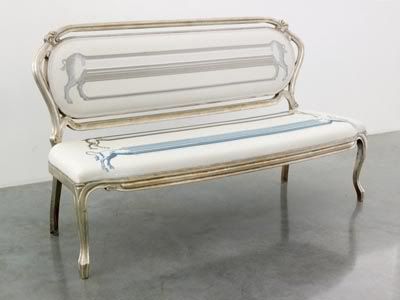
Lathe VIIILathe VIII Detail 1Lathe VIII Detail 2Lathe VIII Detail 3Lathe VIII Detail 4
Lathe VIII, 2008. (Edition of 8)
H 105 L 140 W 85 cm.
Bronze with nitric-acid burned patina and needle stitched embroidered fabric.

Lathe VIII reworks the traditional concept of a loveseat. Two antique chairs have been corrupted, fused together with the vision of modern technology, remade in traditional techniques, and now presenting an entirely new perspective on the conventional loveseat.
There is dynamism in this work, the chairs apparently turn around, pirouette, then spin off and trick the eye by giving the impression of a shift of movement or change of direction.
Like a sequence from The Matrix where the camera rotates around a scene that is frozen-in-time, when taking in the form a certain stillness pervades as you mentally navigate the distorted, alter-reality shape.
In 2008 the Lathe VIII won critics pick of the Design Art London Fair, and was acquired by the Victoria & Albert Museum for their permanent collection with sponsorship from Moet Hennesy. It will also feature in the Telling Tales exhibition curated by Gareth Williams opening in June 2009, which will focus on work by designers who explore the narrative potential of objects, connecting the past with the present.


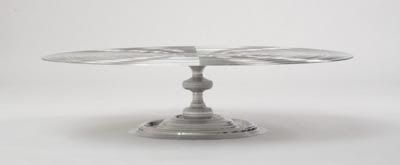
Lathe Table 1Lathe Table 2
Lathe Table, 2008. (Edition of 8)
H 30 L 119 W 119 cm.
Aluminium.

Made of aluminium, the Lathe Table is quite literally created by being turned on a real lathe. In this incarnation however, the chisel carves aluminum directly instead of the traditional wood.
The evocative sense of movement is conveyed in the spinning lines of the quasi vortex, offering the past impression of a moment of great movement and now stillness. Inspired originally by a child’s spinning top, whizzing around at high speed, it has the same illusion that once at its optimal speed it is no longer moving but standing up straight.
The highly polished surface is a product of the lathe turning technique which polishes as it carves the metal. He explains that whereas the Lathe Chairs are more like painting, in that modifications can be made during the production process, the Lathe Table is a one step process which is an honest and direct application of the Lathe concept.

About the designer:
Born in 1975, his mother is Dutch-Indonesian and his father Croatian-Italian. He graduated from the esteemed Eindhoeven Design Academy in 2006, where he could work within the fields of art and design simultaneously without categorization. He studied under Gijs Bakker, Hella Jongerius and Jurgen Bey, carrying out an invaluable apprenticeship at the Juergen Bey Studio. He continues to study philosophy at the University of Utrecht and lives and works in Amsterdam.
Brajkovic uses form and composition like an artist; the spinning composition he uses is comparable to the similarly computer-distortion inspired Vortex Paintings by contemporary artist David Salle, but the form is more likable to seventeenth-century furniture makers, bronze foundry artisans and traditional embroiderers. Thus is the parody of Brajkovic’s work, it tells a story of contemporary society’s need to reference the past, but present it in an idiosyncratically contemporary way. He is drawn to the aesthetics of the past as a way of retaining our memories, but reveres the new, with its unknown and curious future.
- Dezeen.

a+. sebastian brajkovic via dezeen
Read more...